

“The stock market is a device to transfer money from the impatient to the patient.”
- Warren Buffett
The stock market is a powerful, powerful tool. It makes crorepatis out of the poor and beggars out of the affluent. It's easy to understand, difficult to master. It is the most democratised way to make money. We've all heard stories of starting with a few lacs and ending up with crores and crores. So, should you start putting all your money into stocks hoping they double your money in a year or two?
Let's deep dive into a data backed answer into the story of the stock market.
Disclaimer
I am a Mutual Fund Distributor. There is an inherent conflict of interest here.
But we also practice what we preach. More than 90% of our wealth is in Mutual Funds. We follow the markets daily, but we don't trade regularly. We hold both Mutual Funds and stocks for years without selling because we know the power of compounding.
Why should you invest in stocks?
“Risk comes from not knowing what you’re doing.”
– Warren Buffett
Our grandparents were scared of the stock market.
Our parents were cautious.
We have embraced the volatility, and in some cases thrown caution to the wind.
And in some cases we have profited handsomely because of it. Beaten inflation by a mile. Become financially independent. Made wealth to retire.
But what are the reasons you should invest in stocks?
To Beat Inflation
It's as straightforward as it sounds. 20 year average inflation today is at 6% [1]. Fixed Deposits in reputed banks barely provide a 6-7% yield. In situations like these, your returns get eaten into by taxes and inflation. You're barely left with anything.
NIFTY on a 10 year average has given 12.7% returns and hasn't deviated from this even on a 20 year timescale [2]. Equity markets beat traditional debt instruments consistently when looking at longer time frames for beating inflation.
To Learn
The stock markets are nothing if not interesting.They are easy to enter, but extremely difficult to master.
Very few investors can outperform the market consistently over long periods, especially across 20 years or more. That is why investors like Warren Buffett, Charlie Munger, and Peter Lynch are so widely respected and studied.
Understanding equities isn’t a skill you “finish” learning. It’s a lifelong process, which is precisely what makes markets endlessly fascinating.
To Participate in the India Growth Story
India is one of the fastest growing developing countries in the world. India has FY 2025-26 estimates of 7.2% GDP growth [3]. Holding equity means holding a part of the nation that's rapidly expanding and shows no sign of slowing down.
To Make Money And Eventually, Wealth
If invested correctly in the markets for a couple of years, profits can be made.
If invested correctly for a decade or two, true wealth can be made.
People underestimate the power of 12-15% returns over the span of years.
A ₹10000 monthly amount invested in a 7% Fixed Deposit for 30 years will yield you 1.2 crores.
A ₹10000 monthly amount invested in a 15% yielding instrument for 30 years will yield you 6.9 crores.
Volatility is the price you have to pay for higher returns, and eventually, larger wealth.
People's Misconceptions When It Comes To Stocks
You always fear what you don't understand.
- Carmine Falcone
The same is true with equity markets. Most people who fear equities don’t truly understand what they are buying, or why they are buying it.
Then there are those on the other extreme. People who don’t fear the market at all, not because they understand it deeply, but because they underestimate the risks.
One group stays away and misses out. The other jumps in blindly and gets hurt.
The real edge lies somewhere in between: understanding risk well enough to respect it, but not fear it.
Investing Without Tracking
Entering stock markets is easy. Seeing gains rack up hits just the right neurons to make you feel so, so satisfied. But very rarely do people actually track how they have performed against the index.
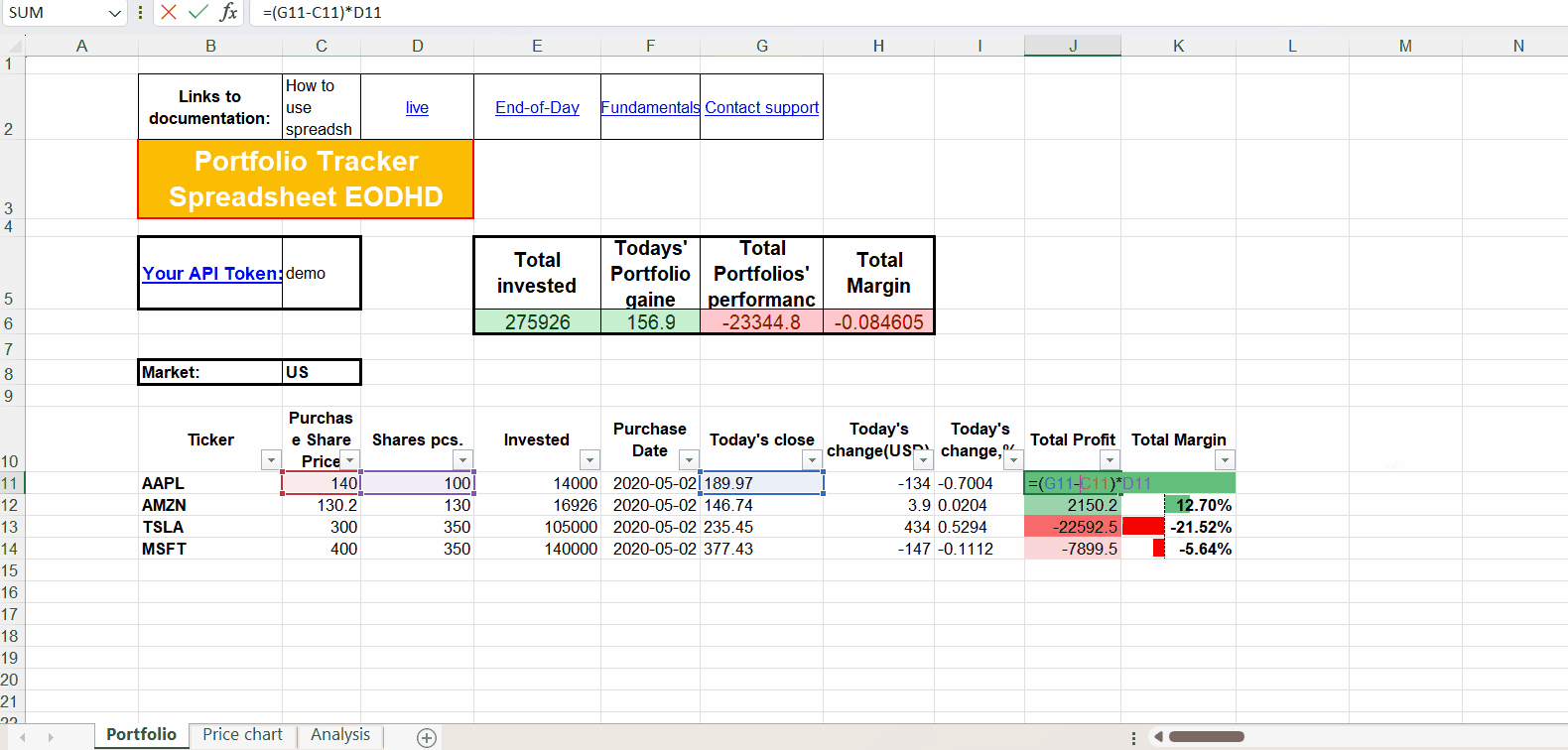
For example, if you are buying a few quality stocks like Reliance, HDFC, ICICI, did you track the returns you have generated when you bought more, sold or held onto them? Did you track if they outperformed the NIFTY? Would you have been better off averaging it out, than trying to time the market?
Investing in Big Safe Stocks
What got you here, won't get you there.
- Book by Marshall Goldsmith
There also seems to be a misconception that investing in big, safe stocks that have seen manifold returns in the past couple of decades is a sure shot way of making money. Why not invest in HDFC Bank, Reliance Industries, Infosys etc. who have given great returns over decades?
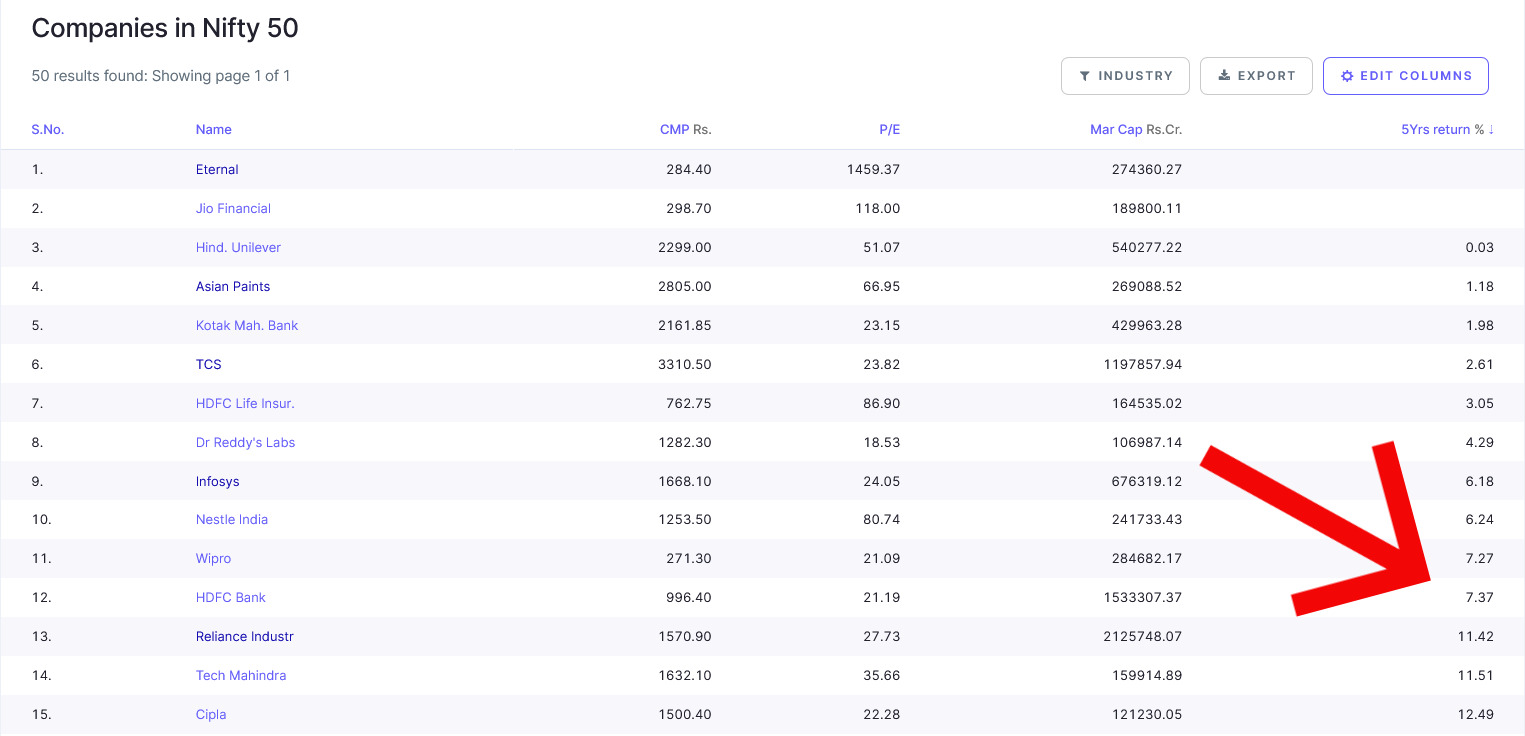
If you had invested in HDFC Bank 5 years ago, you would have made 7.37% returns over one of the best bull markets India has seen. You would have done no better than a bank Fixed Deposit.
TCS - 2.61%
Infosys - 6.18%
Reliance - 11.42%
NIFTY - 14% over that same duration.
Investing in high-quality businesses five years ago did not necessarily translate into high-quality returns - in many cases, they failed to even beat the benchmark index.
The foundation of equity investing isn’t just buying great businesses.It’s buying great businesses at the right price - something that may not have been true five years ago.
Chasing The Next Multibagger Blindly
Multibaggers have become the new obsession in investing. Stories of small-cap and micro-cap stocks turning ₹1 lakh into ₹10 lakh spread far faster than stories of quiet compounding. Naturally, many investors chase these stocks hoping to replicate those returns.
The reality is far less glamorous. While a handful of stocks do become multibaggers, a large majority don’t survive the journey. Over the last decade, several once-popular small-cap names have exited the BSE SmallCap Index after sharp price declines or prolonged deterioration in fundamentals.
Companies like Vakrangee, PC Jeweller, and Yes Bank were once widely owned and actively discussed as growth stories. Each saw severe drawdowns of 70–90% from their peaks, leading to index exits, capital erosion, or long periods of stagnation that wiped out years of investor wealth.
Data also shows that during market corrections, small- and micro-cap stocks tend to fall 1.5–2x more than large caps, making recovery both slower and more psychologically taxing. Add to this survivorship bias - we remember the few winners that went up 5x or 10x, but quietly forget the dozens that diluted equity, faced governance issues, or never returned to their highs.
Multibaggers do exist, but they are rare outcomes, not a repeatable strategy. Chasing them without deep business understanding, continuous monitoring, and strict position sizing often turns investing into speculation rather than wealth creation.
![The infamous fall of Yes Bank [4]](/blogs/the-stock-market-magical-potion-or-snake-oil/figure-03.png)
Rising Tides Raises All Boats
And the years following COVID have been a textbook example of this. Between the March 2020 lows and the recent peaks, the NIFTY 50 delivered strong double-digit annualised returns, while broader indices like the NIFTY Midcap 100 and NIFTY Smallcap 100 significantly outperformed for long stretches. In such environments, returns are often driven less by skill and more by liquidity, valuation expansion, and momentum. When almost everything goes up, it’s easy for investors to believe they’re better stock pickers than they really are.
The problem is that bull markets are poor teachers. They reward average decisions and mask mistakes. As market cycles turn and liquidity tightens, the difference between skill and luck becomes painfully clear. A little humility - recognising when returns came from the market rather than from insight - goes a long way. In investing, long-term success is built not on believing you’ve cracked the code, but on continuously questioning whether you actually have.
Investing Is Boring
Charlie says we have three boxes: In, Out, and Too Hard. You don’t have to do everything well. At the Olympics, if you run the 100 meters well, you don’t have to do the shot put.
- Warren Buffett
Yet many investors treat markets like a competitive sport. There’s an adrenaline rush in making bets, chasing breakouts, and being “right.” The problem is that adrenaline has no place in serious investing. Markets reward repeatable decision-making, not excitement.
Good investing is built on systems - clear filters for what falls within your circle of competence, rules for what automatically goes into the “Too Hard” box, and a process that can be repeated regardless of market mood. The more emotional and thrilling an investment feels, the more likely it is to be a distraction rather than an edge.
Real investing is quiet, disciplined, and often boring. And that boredom is not a flaw - it’s the feature that keeps emotion, ego, and impulse out of the process.
So, should you invest in stocks?
So are they a magical potion that will make you a crorepati tomorrow, or are they snake oil sold to you in the name of greed? In my opinion it is neither, it's a tool for the disciplined to let compounding work in their favour.
The equity landscape is interesting, if that's not a hurdle for someone, what are the factors I would use to decide whether someone should invest in stocks?
Do you have the time? The biggest barrier people have is time. Your job, business or studies take time. It takes even more time if you want to progress in your field. This leaves little to no time for outside activities. If you put in the extra time at your job, you may get a pay hike of 15-20%. If you work on your businesses a bit harder, you can grow your income there by 20-30%. In very rare cases, would it make sense to me to let go of the extra pay hikes from your profession, to devote time to a time-tested uncertain practice of trading / investing in equities.
Do you have the deep knowledge? All the successful investors I know of have lengthy degrees and numerous years in the market. The few exceptions there prove the rule. Being good at the markets is the same as being good at anything else - it may require formal education and it definitely requires years of (full time) work.
Do you have the patience and discipline? Can you sit and do nothing for months and years? Warren Buffett famously said "If you aren't willing to own a stock for 10 years, don't even think about owning it for 10 minutes". And it's important to remember that a high growth stock you are buying today may only exceed it's fair valuation a decade later. It's important to have the patience and discipline to see your thesis fructify.
Do you have the humility? That statement may seem harsh, but I want to be frank. The biggest reason why I limit myself from investing in direct equities is I don't want to confuse luck with skill. The humility to differentiate between the two is difficult, but once found lends itself to disciplined investing.
Equity investing, in my honest view, is only for those who have all of these 4 qualities. Lacking one of them is the same as you lacking bowling skills as a team even though you may have the best batsmen. It takes 1 opponent who excels at batting to make you lose over and over again.
References
[1] Macrotrends Inflation Index India
[2] Screener
[3] GOI